badge

Wednesday, March 2, 2016

Book Review: My Husband & Other Animals (by Janaki Lenin)


"It makes reproductive sense to be hot whether it's a neem tree, magpie-robin or a crocodile.
Or humans. "

Ok. This one is a laugh riot. Just the name is enough to put a smile on one's face. And I guess that is what caught my attention. Another one of my online purchases from Amazon, I picked it up merely on the basis of its catchy title, the black and yellow cover design and one fleeting glance through the blurb. Thankfully I did not regret it.

Penned by Janaki Lenin, who is married to a herpetologist and wildlife conservationist, this consists of several short length essays dealing with the couple's own experiences with wildlife (mostly reptiles) and some really hilarious anecdotes. Honestly, I am quite terrified of reptiles but all thanks to the author for making them sound almost angelic.

I have quite a few favorites among the stories, especially the ones that involve frogs. Imagine living in a house that has been colonized by frogs !! I can almost feel the author's pain as I am going through a similar hellish situation. I am having such a tough time fighting off the cockroaches that have invaded and taking over what I call my home. At times, it almost feels like I am paying the rent and the bills even as they have a free run of the place. ( And no, the Housejoy pest control services did nothing to help the situation.) But coming back to the frogs, the 'Frognapped!' story is a clear winner.

Strangely, the snakes come a close second. Being as terrified of snakes as I am, I can clearly visualize why people seem to throw their common senses to the wind even as they get a glimpse of the creepy crawlies. But burning down one's one house ? Or getting shot in the head while trying to pin down a snake with a rifle ? Incredible but true.

The crocodile stories are also quite ground breaking. One hardly associates these creatures with any kind of intelligence sans the kind required to catch a prey. But imagine calling a crocodile doing tricks that could put your doggy to shame. One is sure to treat these animals with new found respect after going through this book.

A thoroughly enjoyable read, it kind of conveys the message that it is quite possible to coexist peacefully with nature and other species. If only, we learn to respect that thing 'deliciously tangible and intangible thing' called 'SPACE' .....

Thursday, February 18, 2016

Book Review : The Emperor Of All Maladies ( Siddhartha Mukherjee )


A fascination with fatality ? Or just a blatant desire to stare into the eyes of death ? Well, it was a mix of both that drew me to this book which has aptly been subtitled as "A biography of Cancer".

Not meant for the weak hearted, this one is about the journey of the discovery of cancer and the ongoing fight for an absolute cure. The opening chapter about Carla, a woman in her thirties and suffering from leukemia, set the note for the rest of the book. And it is one of urgency and terror mixed in equal proportions.

The author gives up a heads up on the early cancer theories like 'suppuration of blood' and 'weisses blut' which finally gave way to the understanding of leukemia, one of the earliest forms of cancer to be discovered. As studies revealed more details, the first inroads into the discovery of a cure was made. The chapters on chemotherapy as well explained and in a way underline both the moral dilemma and the need for clinical trials. Min Chiu Li's strategy which resulted in the first chemotherapeutic cure is one such example when researchers have been accused of "experimenting on people".

With the discovery of Cancer, the need to study and work towards the cure gathered momentum. There was a need for tremendous amounts of fund raising and bringing Cancer to limelight. The role of Mary Lasker and Farber in goading the nation to step up its spending on Cancer research is well documented.

One of the most moving chapters in this book is that on breast cancer and masectomy. Gory in parts and cruel in others, one actually wonders if such kind of cure is in any way better than death.

There is a mention of AIDS too which was also referred to as GRID ( gay-related immune deficiency ) during the early days as it was associated with gay men. Acceptance of Tobacco as one of the leading carcinogens and the legal battled spawned by it are also described in detail. There is more interesting trivia interspersed throughout the volume but its kind of too much information to be squeezed into one review.

Siddhartha Mukherjee has done thorough justice to the book. Given that this is one voluminous and arresting read with about 472 pages of information steeped in medical terminology, choose this book with caution and read with loads of patience. Greatly recommended for those related to the medical field.

[ Note - I thoroughly enjoyed this read given that I am a big fan of medical mysteries like Robin Cook's works. Looking forward to picking up the "Immortal Life of Henrietta Lacks" next. ]

Monday, February 15, 2016

Book Review: The Perks of Being a Wallflower (Stephen Chbosky)


A moving book that in a way reminded me of 'The Fault In Our stars'. Life need not be perfect in order to be beautiful. And that is what I felt when I was initiated into the life of Charlie, a shy teenager. Written in the form of letters to an unknown friend, it chronicles his journey through high school. Love, sex, drugs and relationships, the book touches upon every aspect of his life.

Branded weird or even a 'wallflower', Charlie is prone to mental disturbances due to something bad that happened to a close relative (Aunt Helen) during his childhood days. As one goes through the book, one can realize the deep scars that abuse can leave on the mind of a youngster. That leaves him kind of incapable of establishing proper relationships. 

But the turning point in his life comes when he meets Sam and Patrick. Suddenly he finds that he is part of this very happening circle but he just continues hanging around without really being a part of it. "I really haven't said much. I just kind of listen and nod because Patrick needs to talk.". The line just about sums up his involvement with anybody including Patrick and even the girl he is dating, Mary Elizabeth. And that is something which Sam to him explains towards the very end of the book. Personally, this is the best part of the book and I read it over and over because I loved it so much. 

"It's sweet and everything, but it's like you're not even there sometimes. It's great that you can listen and be a shoulder to someone, but what about when someone doesn't need a shoulder. What if they need the arms or something like that ? You can't just sit there and put everybody's lives ahead of yours and think that counts as love. You just can't . You have to do things. " Beautiful lines indeed. Just the perfect description of a wallflower, isn't it ?

In the intervening chapters, the author explores the hidden world of gay relationships. Patrick ,who is gay and is unpretentious about it loves Brad who is secretive about his sexual orientation. But when they are discovered by Brad's father, Brad gets beaten up pretty bad. Which is sad as people still think of homosexuality as a kind of disorder. 

Then there is the thing about the relatives. People who do not really like each other but still get together on important occasions to measure up each other's kids. Though it is just a filler in a great story-line, the topic has been dealt with in sufficient detail. Finally, we have the relationship between Charlie and his advanced english teacher Bill. Other than Sam, he is one of those people who recognize Charlie as gifted and very much special. The books that he gives Charlie are all classics and a must have for people who really dig that kinda stuff. But more importantly, Bill tries in his own way to get Charlie to live for himself first and then participate in the lives of other people.

Overall, a great book. 


Sunday, February 7, 2016

Book Review : Ajaya - Roll Of The Dice (Anand Neelakantan)


After the enormously likable 'Asura', I could not resist myself from picking up more of Anand Neelakantan's literary works. And as I had guessed it, I loved the 'Ajaya' series which is the author's take on Mahabharata's characters. This is the first book in the series and predictably, it is written from the viewpoint of the vanquished 'Kauravas'.

It begins with the childhood days of the cousins. Suyodhan ( that is how Anand refers to Duryodhan, the eldest Kaurava ) and his siblings are depicted as carefree souls who are needlessly badgered by the Pandavas. Yudhisthira is the obsequious child who is out to please all while Bhima is shown to be a bully. In fact the only Pandav who shows some heart is Arjuna. A scheming Kunti, an indifferent Gandhari, a helpless Dhritarashtra, a vengeful Shakuni and an authoritative Bhisma are some of the prominent characters who influence their childhood.

The grooming of the young royals under the tutelage of Dronacharya is given sufficient coverage. This is the section of the book where we get to have a sneak peek of the personalities of the young Pandavas and Kauravas. The infamous Ekalavya incident is also played out in gory detail in this section. While most of us would have already heard of it but reading it in Neelakantan's language almost moves one to tears.

The introduction of Karna and his desire to break free of caste shackles is another high point of this book. His travel to South India and his grooming under Parshuram wonderfully depicted. The author also spends sufficient effort in developing the bond friendship that develops between Karna, Suyodhana and Aswathama (Drona's son) as it is quite pivotal to the climax of the epic.

The subplots are wonderfully developed and integrated in a way that is almost seamless. Despite there being too many characters in the story, one never feels a break in the narrative. There is an excess of gore in sections (which I avoided by skipping a few paragraphs and pages) of the book. The building of Indraprastha and the exploitation of Mayasura and his Naga folks is one section that almost had me choking on tears.

Apart from the central characters, the minor characters like Ekalavya, Jara and Mayasura are extremely well developed. Based on rigid caste lines, this is one take on the Mahabharata that will have the purists screaming for blood. Shunning the so called 'divine origin' of the Pandavas, the author has referred to them as 'bastards'. Kunti is shown as the power hungry widow who is out to ensure that her son 'Yudhisthira' ascends on the throne of Hastinapur at any cost. She is manipulative and merciless as she does not hesitate even for a moment before trapping the poor Nishada family in the palace of lac. The way she treats her own daughter in law is also deplorable for she uses the young woman as a pawn for furthering her own ambitions. Shunning popular folklore where she is said to have unwittingly wed Draupadi to the five Pandavas, Neelakantan paints the picture of a woman who uses cold logic to ensure that a pretty woman does not become the reason for discord among her sons. As Draupadi puts it, it is "the darkness within" her soul that speaks for her.

The climax of this book ends at the infamous dice game where the Pandavas lose everything including themselves and their common wife Draupadi .

[ Watch out this space for the next book of the series 'The Rise of Kali'. To be reviewed shortly ...]


Monday, January 18, 2016

Book Review : The Japanese Wife ( Kunal Basu )


A clash of cultures ? Or an amalgamation to cater to the preferences of an increasingly globalized audience ? Maybe a bit of both I would say. Kunal Basu quite manages to author a clutch of short stories that manages to make one sit up and take notice. While each story is cleverly composed and clearly not on the repetitive side, some of them are definitely more entertaining and heart-warming than the rest.

The first and most important one is 'The Japanese Wife'. Subtle, emotional and providing a view into a strangely knotted web of human relationships, this one beautiful and stands for love of a platonic kind. Nothing that we commonly witness in this age but nevertheless it exists and thrives in some corner. The relationship between a school teacher and his Japanese penfriend turned wife is extremely moving. And more so at the climax when she arrives to mourn the death of a relationship that has never been consummated.

Another one among my favorites is on a slightly more cheerful note. 'Grateful Ganges' is about an american who arrives in India to immerse her husband's ashes. Her stay in a Punjabi household is remarkable and filled with remarkable moments. But the author cleverly saves the best for the last. The climax which has her reuniting with her soul-mate is a moment beautifully etched in ink.

'The accountant' on the other hand is one strange yet exceptional story. The transgression into the past life of a boring middle aged accountant is clearly a refreshingly new plot. Though I wished the ending to have been different, this remains among my choice picks.

'Tiger! Tiger!' and 'Snakecharmer' are the other two stories that had me hooked till the end. Though very different from each other, both deal with death. And the void that is created when a loved one leaves the mortal world.

Unfortunately, the remaining stories ( 7 of them to be precise ) were just plain average if not extremely boring ( I did not finish 2 of them) . But that is purely my opinion. Some folks may enjoy the lang drawn philosophical bits in these stories even if I found it tough to relate to these bits.

Still, I would recommend this book to folks who enjoy short stories ( and the sheer freedom that short reading sessions provide ) !!

Thursday, January 14, 2016

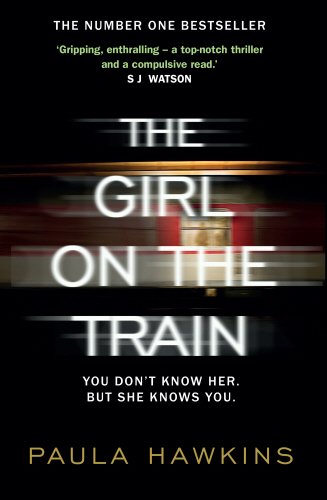
Book Review : The Girl On The Train ( Paula Hawkins )


It is one of the best books of 2015. A thriller that kind of gets into your mind. Just like an innocent bystander who gets drawn into an surprising powerful vortex while trying to establish a passing connection with some stranger.

The story is about a girl who sees a blissful couple on her way to work everyday. It's just a glimpse that she catches from the train but proceeds to build up a fairy-tale around it. Just a recreation of everything that her life was or what it could still have been had not it been for a failed marriage and her drinking problems. But there are no real life fairy-tales and this one ends rather abruptly when the woman goes missing. Invariably, she finds herself mixed in the events leading to the disappearance . Only she cannot remember what it is due to a mental disorder.

To be honest, I found some parts of this book to be quite depressing. The lead character is quite sad, forlorn and there is too much focus on her drinking problem. While I have to say that Paula Hawkins has explained it very well but it kind of gets revolting and even repetitive at times. As far as thrillers go, this one seems to be more on the depressing side. In fact, all the characters are painted with grey, each one with failings of his/her own. Yeah, it is one of those books without any heroes. Only complicated and twisted characters who do not seem to be thinking straight.

The going back and forth between the dates is also kind of confusing at times. I had to look back a couple of times to make sure that I had the things in right chronological order. But the author makes up for every flaw with a climax that is as convincing as it can be.

A must read if you can handle a bit of depressing stuff. 

Monday, January 11, 2016

Book Review : Ramayana - The Game Of Life - Stolen Hope (book 3) ( Shubha Vilas )


This post was originally posted in my other blog Oriyarasoi. Click here to visit.

Have you grown up reading Amar Chitra Katha, the beautifully illustrated series that depicts the tales of various Hindu God, demigods, sages (rishis) and demons (rakshas ) ? Well, I have been lucky enough to have access to the series during my childhood days and the first half of this book felt like I was revisiting those memories. The glorious tales of the numerous combats between good (Gods/sages) and evil (rakshas) are described in such vivid manner that I did not even miss the wonderful illustrations that made Amar Chitra Katha so unforgettable. As with his earlier books, the author has put up very useful footnotes on each page which helps the reader to understand the finer nuances of the story.

The story of King Nahusha is one such story that I read a long time back. The pious human king got a chance to ascend the throne in Heaven when Indra lost out due to a sin committed by him. But the corrupting thing that power is, it gets the better out of everyone except for the best. Getting drunk on power, Nahusha soon starts coveting Indra's wife who reaches out to Brihaspati, the Guru of the Demigods. The Guru devises a scheme which entails that Nahusha would have to reach the queen's Palace by riding on a palanquin carried by most exalted sages. The Guru cleverly ropes in sage Agastya who is famous for his legendary temper. Goaded by the lust filled Nahusha for moving faster, the fearsome sage lost his temper and threw back the words that the king had uttered in haste. While 'Sarpa' is usually taken to mean snake, it also means 'faster' in Sanskrit. An engrossing tale indeed ! And this book is just replete with such examples.

This book describes the journey of Lord Rama, Sita and Lakshmana though the Dandakaranya forests where they meet many of the sages who pour out their sufferings to them. They move from one ashram to another, gathering the blessings of many and at times releasing others from a spell or curse. Settling in picturesque and apparently peaceful Panchavati, they come across the demoness Supanakha ( the one with broad long nails ) who fancies Lord Rama. Given his cool demeanor, the Lord initially indulges her but when her obsession takes a violent turn, he asks Lakshmana to stall her advances. This triggers a major war with a huge army of the demons descending on the trio.  A bloody war is fought and Lord Rama emerges victorious.

This sets off a chain of events which lead to the kidnapping of Sita. The manipulative Supanakha seduces Ravana's line of rational thinking by waxing eloquent about Sita's unmatched beauty. The demon king beseeches his uncle Maricha to help create a web of deceit to kidnap the hapless Sita, more to satiate his lust rather than to avenge his sister's insult. The elderly demon tries his best to dissuade Ravan from advancing towards his impending doom but fails to do so.

Most of us would be very well acquainted with the next episode that follows. 'Sitaharan' or the kidnapping of Sita is one of the most well known parts of the epic and one has much to learn from it. Succumbing to material desires and doubting a genuine well-wisher are some of those. The kidnapping is followed by the fight with the valiant Jatayu who loses his life while trying to rescue Sita from the clutches of Ravana. One is also introduced to the Vanaras for the first time at this stage. Shubha Vilas has done a fabulous job in detailing even the minutest of events that occur during Ravana's flight to Lanka and I learnt quite a few details that I was not aware of.

Lord Rama is distraught once he discovers that Sita is gone. Searching for her, he meets the old and frail Shabari who leads him to Sugriva.

[ To be continued in the next book .... ]

This review is a part of the biggest Book Review Program for Indian Bloggers. Participate now to get free books!